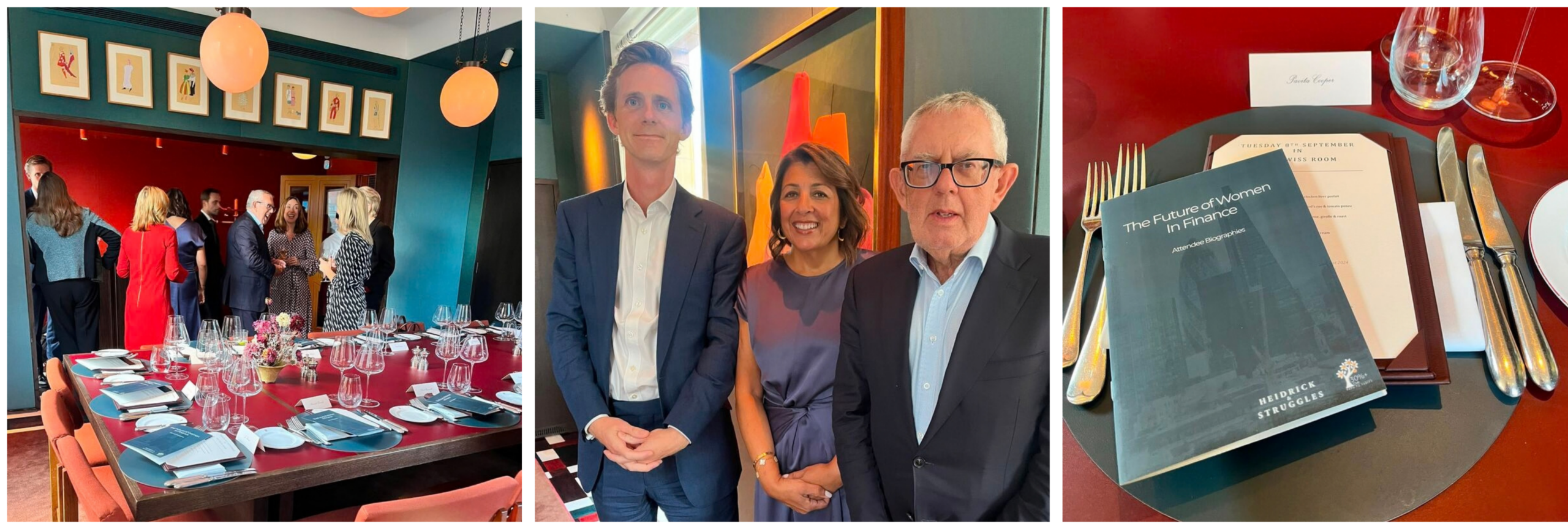
The challenge is no longer simply getting women onto boards. It is changing the system that decides who is seen as “CEO material” in the first place. That was the overarching message from our recent Women in Finance roundtable, co-hosted with Heidrick & Struggles.
Boards are approaching gender parity, but progress remains much more fragile at CEO level. The discussion focused on why women continue to fall out of the leadership pipeline, and what needs to change.
Looking beyond the traditional route
One of the key themes was the narrowness of the traditional path to CEO. Women remain less represented in the P&L and divisional leadership roles that are often treated as essential stepping stones to the top job. But this is not simply a pipeline issue. Culture, scrutiny, confidence, sponsorship, caring responsibilities and the expectations placed on women all play a role. The question is whether organisations are looking at where and why talented women are stepping away from the traditional route.
Rethinking what makes a CEO
The conversation also raised a broader question: are organisations rewarding the right leadership traits? The qualities associated with successful leadership are changing. Collaboration and emotional intelligence are increasingly important, alongside those traditional measures of ambition and authority. If the leadership role is changing, perhaps our definition of who is “CEO material” needs to change too?
What can make a difference?
There are already signs of progress. Active sponsorship, more tailored career paths and broader definitions of leadership readiness can all help create different routes to the top. Chairs and senior leaders have a particularly important role to play—not just in supporting women, but in challenging the assumptions and processes that determine who gets opportunities in the first place. AI may add another dimension. As technology changes the nature of work, it could also change the skills we value most in leaders, and create an opportunity to rethink the traditional CEO profile.
A systems-wide challenge
The conclusion from the discussion was clear: there is no single intervention that will solve this. Progress will require a systems-wide approach: from career pathways and sponsorship to culture, childcare, media scrutiny and how organisations assess leadership potential.
The opportunity is not simply to help more women navigate the existing system. It is to build a system that recognises leadership potential differently in the first place.